
The 4Cs of Diamonds
Color, clarity, cut and carat weight are known as the 4Cs. Together they define a diamond’s quality and ultimately its value. The 4Cs were created by the Gemological Institute of America (GIA) and are now the universal way to describe any diamond, anywhere in the world – so you know exactly what you are buying.
The 4Cs in a Nutshell
The 4Cs Explained
Cut
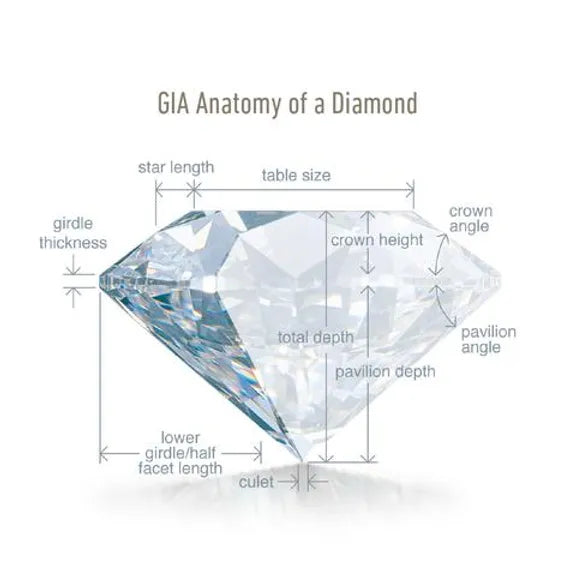
A diamond’s cut determines its sparkle. Shaping a stone with the proportions, symmetry and polish needed for an excellent cut grade takes real artistry and skill. The finer the cut, the more the diamond sparkles.
For standard round brilliant diamonds, GIA grades cut on a five-step scale: Excellent, Very Good, Good, Fair and Poor.
Color
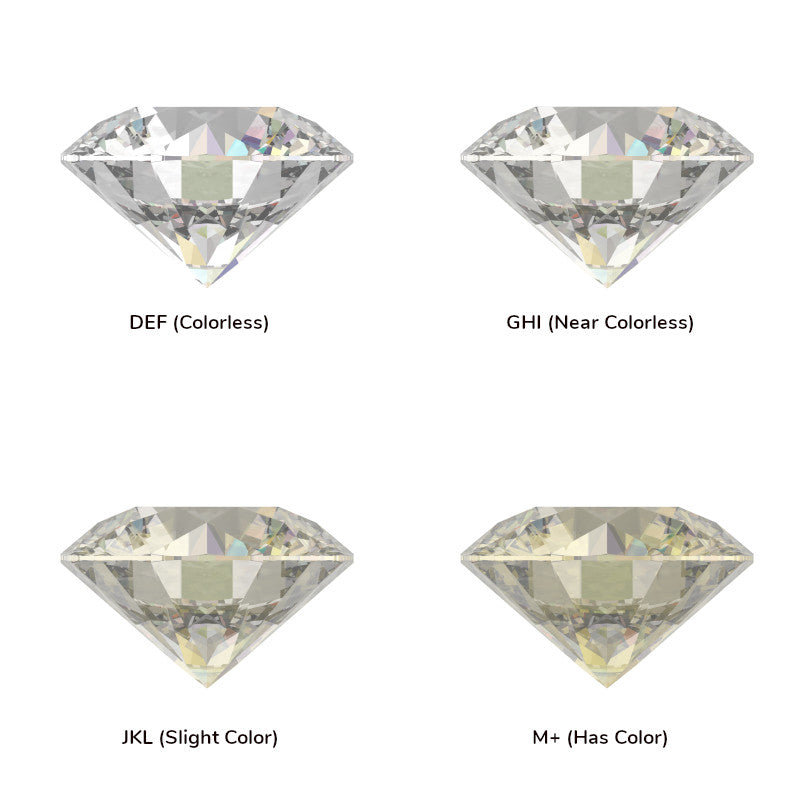
GIA’s color grading system measures the absence of color. It starts at D, which is colorless, and continues to Z, which has a light yellow or brown tint. The differences between grades are so subtle they are often invisible to the untrained eye, but they can make a big difference in quality and price.
- D–FColorless
- G–JNear colorless
- K–MFaint
- N–RVery light
- S–ZLight
Clarity
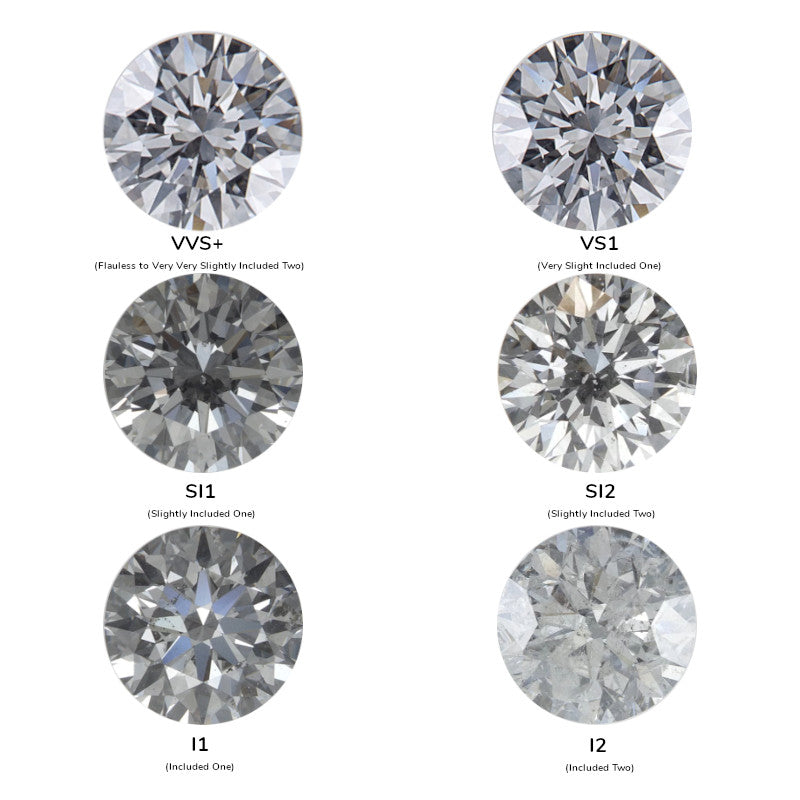
Natural diamonds form from carbon exposed to tremendous heat and pressure deep in the earth. Most contain tiny clarity characteristics: inclusions inside the stone and blemishes on its surface.
If all else is equal, the closer a diamond is to flawless, the higher its value. Many inclusions and blemishes are too small to be seen by anyone but a trained grader, which is why expert, accurate clarity grading is so important.
Clarity Grades
| Grade | What a skilled grader sees at 10x magnification |
|---|---|
| Flawless (FL) | No inclusions and no blemishes. |
| Internally Flawless (IF) | No inclusions; only blemishes. |
| Very, Very Slightly Included (VVS1, VVS2) | Minute inclusions that are extremely difficult to very difficult to see. |
| Very Slightly Included (VS1, VS2) | Minor inclusions that range from difficult to somewhat easy to see. |
| Slightly Included (SI1, SI2) | Noticeable inclusions that are easy to very easy to see. |
| Included (I1, I2, I3) | Obvious inclusions that may affect transparency and brilliance. |
Carat Weight
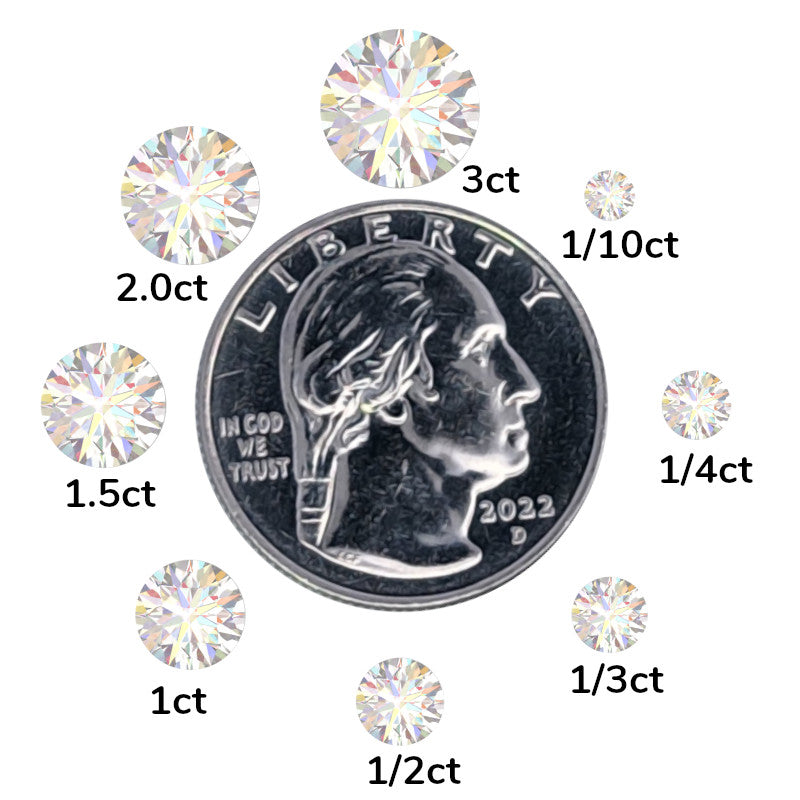
Diamond weight is measured in carats. One carat equals 0.2 gram – about the weight of a paperclip – and is divided into 100 “points,” so a 50-point diamond weighs half a carat.
Because larger diamonds are rarer, they cost more than smaller diamonds with the same color, clarity and cut grades. Jewelry with several diamonds lists the carat total weight (cttw) of all the stones combined.

What About Lab-Grown Diamonds?
Lab-grown diamonds are real diamonds with the same chemical makeup and sparkle as diamonds mined from the earth, usually at a lower price. Like natural diamonds, they are described by their cut, color, clarity and carat weight. We carry both, so you can compare them side by side.
Diamonds in Our Showcase
The best way to understand the 4Cs is to compare diamonds side by side. Here are a few favorites.
-
 Engagement1/2 Cttw. Solitaire
A classic round solitaire.
-
 Earrings1.0 Cttw. Round Diamond Studs
Round brilliant studs in 14K white gold.
-
 Semi-mount3/4 Cttw. Semi-Mount
Pick the center diamond to suit your 4Cs.
-
 Earrings1.0 Cttw. Princess Cut Studs
Square princess cut diamonds.
Want to Learn More?
GIA, the creator of the 4Cs, has in-depth guides, videos and tools for each one.
Compare Diamonds With Us
Photos and charts only go so far. Stop by our Canon City store and we’ll show you how cut, color, clarity and carat look in real life – and help you find the right balance for your budget.
703 Royal Gorge Blvd, Canon City, CO 81212 · 719-269-7212 · info@nelsenjewelry.com
 Tuesday - Friday: 10:00 to 5:00

 info@nelsenjewelry.com